
Knee Arthroscopy (Meniscus)
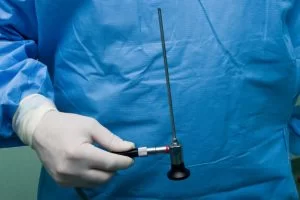
Knee arthroscopy is a modern, minimally invasive surgical technique that allows the orthopedic surgeon to see inside the joint, diagnose, and treat even the smallest lesions, including those in hard-to-reach areas, without requiring patient hospitalization.
In the past, the only treatment option was open surgery, which came with all the associated risks and complications. Today, advancements in technology have produced ultra-high-definition cameras and monitors, which, when combined with specially designed micro-instruments, have made arthroscopy an extremely effective method for treating various knee conditions and injuries.
This pioneering technique is performed only by specially trained orthopedic surgeons.
Orthopedic Surgeon – Sports Medicine Specialist Anastasios Deligeorgis has specialized in the latest arthroscopic surgical techniques at internationally accredited orthopedic training centers. He has also served as a clinical arthroscopy trainer in major hospitals abroad and at international conferences. Additionally, the 3rd Orthopedic Clinic at HYGEIA Hospital is one of the few orthopedic centers in Greece that is internationally certified as a training center for arthroscopic surgery.
When is knee arthroscopy indicated?
Knee arthroscopy is commonly used for:
- Meniscus tear: to repair or remove the torn piece
- Anterior or Posterior Cruciate Ligament tear: for ligament reconstruction
- Removal of loose osteochondral fragments
- Articular cartilage damage: to clean the lesion and promote healing using techniques like drilling, microfracture, or chondrocyte transplantation (mosaicplasty)
- Synovial membrane removal in cases of inflammatory diseases
Get the Help You Need Today!
How is the preoperative assessment for knee arthroscopy done?
After taking a detailed patient history and conducting a clinical examination, the orthopedic surgeon may request a knee X-ray or an MRI scan to confirm the diagnosis.
Can knee arthroscopy be performed under regional anesthesia?
Yes, knee arthroscopy can be performed under regional anesthesia, light general anesthesia, or a combination of both. The choice of anesthesia depends on several factors, including age, existing health conditions, smoking habits, and more. The anesthesiologist will discuss the options with the patient and recommend the most suitable method.
What is the surgical procedure?
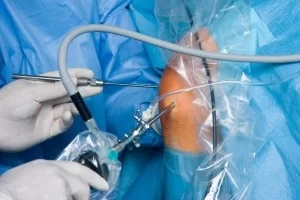
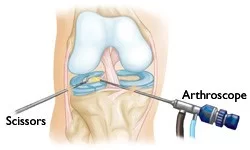
The orthopedic surgeon makes a small incision (around 3–5 mm) at the front of the knee to insert the arthroscope, which carries a miniature camera. A sterile fluid (saline solution) is injected using a special pump to flush and expand the joint, making the procedure easier. The camera is connected to a cold light source and a monitor, displaying a highly magnified, clear color image that allows the surgeon to view the inside of the joint in great detail.
Next, the surgeon inserts specially designed micro-instruments through a second small incision to repair the damage. With arthroscopic navigation, the surgeon can perform multiple corrective actions inside the joint.
At the end of the procedure, the small incisions are stitched, and an elastic bandage is applied. The entire surgery is recorded on DVD, which can be shown to the patient during the postoperative period.
The duration of the surgery depends on the condition being treated and can range from 20 minutes to an hour.
Patients are discharged the same day.
What are the advantages of arthroscopy?
- Minimally invasive and low trauma technique
- High diagnostic accuracy
- Significantly lower risk of complications
- Minimal postoperative pain
- Better cosmetic result due to very small incisions (no visible scars)
- No need for hospitalization
- More effective and faster recovery
What is the postoperative course?
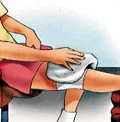
It is important that the patient keeps the operated leg elevated during the first few days after surgery. Cryotherapy, as frequently as prescribed by the doctor, will help reduce postoperative swelling and pain.
Get the Help You Need Today!
Bandaging
Upon discharge from the hospital, the patient’s wound will be covered with adhesive gauze and an elastic bandage. The doctor will inform the patient how often the dressing should be changed and when the stitches will be removed. Typically, the first follow-up examination takes place 1–3 days after the surgery.
Weight Bearing
Postoperatively, it is advisable for the patient to use a pair of crutches during the first few days and to bear weight on the leg as much as pain allows. Usually, crutches are not needed for more than a few days, but this depends on the specific knee injury and the treatment performed. Every patient is different, and the exact instructions regarding weight bearing will be given by their doctor.
Driving
When the patient can start driving again depends on several factors such as:
- Which knee is affected
- Whether the car has a manual or automatic transmission
- The type of surgery performed
- The level of pain
- The kind of pain relief being used
- The ability to control the leg
Strengthening Exercises
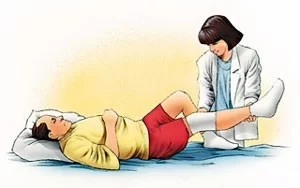
Just as surgery is essential, so is postoperative strengthening. Strengthening exercises begin immediately after surgery. The first and simplest exercises are isometric contractions of the quadriceps muscle. Depending on the case, the orthopedic surgeon will provide the patient with a specific set of exercises that must be performed consistently according to instructions. These are crucial for restoring range of motion and muscle strength.
A well-structured rehabilitation program at a specialized physiotherapy clinic can greatly contribute to a faster and more complete recovery.
What is the recovery process like?
Recovery after knee arthroscopy is significantly faster than with traditional open knee surgery. It is very important for the patient to carefully follow the orthopedic surgeon’s instructions.
Are there any complications from knee arthroscopy?
Complications from knee arthroscopy are extremely rare (such as bacterial infection, deep vein thrombosis, or hemarthrosis) and can be fully treated with early diagnosis and the appropriate medical care.