
Ankle arthroscopy (commonly referred to as ankle arthroscopy) is a modern, minimally invasive surgical technique through which the orthopedic surgeon can view the inside of the joint without causing damage, identify various lesions — even the smallest ones — and immediately repair them.
In the past, the only therapeutic option was open surgery, which came with all the associated problems such as significant joint trauma, prolonged hospitalization, and immobilization with pain lasting for many weeks. Today, technological advances have created very high-resolution monitors and cameras, which combined with the design of special, very thin micro-instruments, have made arthroscopy a highly effective method in treating many pathologies and injuries of the ankle.
Ankle arthroscopy is not as widespread as knee or shoulder arthroscopy and is performed only by specialized orthopedic surgeons.
Orthopedic Surgeon – Sports Medicine Specialist Anastasios Deligeorgis has specialized in the latest arthroscopic surgical techniques at internationally certified orthopedic training centers. He has also served as a Clinical Arthroscopy Instructor at major hospitals abroad and at international conferences. Additionally, the 3rd Orthopedic Clinic of Hygeia, where he is Deputy Director, is one of the few orthopedic centers in Greece internationally certified as a training center for arthroscopic surgery.
What is the ankle?
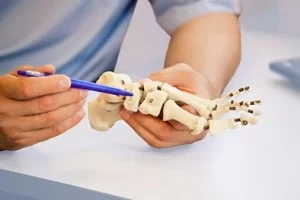
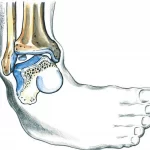
The ankle is the joint that connects three bones: the distal tibia and fibula on one side and the talus on the other. The parts of these bones inside the joint are covered by articular cartilage, a smooth surface that allows smooth sliding and absorbs shocks during movement and loading.
The joint is surrounded by the joint capsule, a thin membrane that produces synovial fluid, which hydrates and lubricates the cartilage and reduces friction.
What are the indications for ankle arthroscopy?
A variety of soft tissue, cartilage, and bone lesions in the ankle can be treated arthroscopically, provided conservative treatment (such as physiotherapy, medication) has been ineffective. Ankle arthroscopy is commonly used for:
- Cartilage tears, for cleaning the lesion and creating conditions for healing using drilling or microfractures, as well as autologous chondrocyte transplantation.
- Removal of synovial membrane in inflammatory conditions.
- Removal of osteophytes (bony outgrowths) or loose bodies.
- Impingement syndrome (bone or soft tissue impingement).
- Early ankle arthritis – arthroscopic ankle fusion.
- Ligament injuries of the ankle (quite common in athletes or other patients after injury without proper treatment).
Get the Help You Need Today!
What are the advantages of ankle arthroscopy?
The main advantages of ankle arthroscopy are:
- Minimal tissue trauma
- Bloodless procedure
- No hospitalization required
- Minimal postoperative pain
- Rapid recovery
- More effective restoration of the condition
- Quick return to daily and athletic activities
- Significantly lower risk of complications
- Better cosmetic result due to very small incisions (no scars or deformities on the skin)
How is the diagnosis made?
Diagnosis is based on the injury history, clinical examination, and imaging with X-rays or MRI.
What is the appropriate anesthesia?
Ankle arthroscopy can be performed either under regional anesthesia or mild general anesthesia. This depends on factors such as age, coexisting health problems, smoking, and others. The anesthesiologist will discuss with the patient and recommend the best method.
How is ankle arthroscopy performed?
The orthopedic surgeon makes a small incision, just a few millimeters (3-5 mm), on the front surface of the ankle, through which a special microscopic camera (arthroscope) is inserted. Then, sterile fluid (saline) is injected with a special pump to wash and distend the joint, facilitating the operation. The camera is connected to a cold light source and a monitor, through which the surgeon can see inside the joint magnified and in great detail.
Next, the surgeon inserts specially designed micro-instruments through a second small incision to repair the damage. Using the arthroscope navigation, the surgeon can thoroughly inspect the entire joint and perform multiple corrective procedures on the spot if needed.
In some cases, the application of biological therapies (Stem Cell or Autologous Chondrocyte injections, Platelet-Rich Plasma – PRP) combined with arthroscopy can significantly contribute to the healing process.
At the end of the procedure, the small incisions are sutured, and an elastic bandage is applied. The arthroscopic procedure is recorded on DVD and can be shown to the patient during the postoperative period.
The duration of the surgery depends on the lesions but usually lasts up to one hour.
The patient can usually be discharged the same day.
Get the Help You Need Today!
What is the postoperative course like?
It is important for the patient to keep the operated leg elevated during the first few days after surgery. Additionally, applying ice therapy as often as recommended by the doctor will help reduce postoperative swelling and pain.
Bandaging
Upon discharge from the hospital, the surgical wound will be covered with adhesive dressings and an elastic bandage. In some cases, a special splint may be required. The doctor will inform the patient how often the dressing needs to be changed and when the stitches will be removed. The first follow-up is usually scheduled 1–3 days after surgery.
Weight-bearing
After ankle arthroscopy, it is advisable for the patient to use crutches during the first few days and to bear weight on the leg only as much as pain allows. Typically, crutches are not needed for more than a few days, but this depends on the extent of the damage and the treatment performed. Each patient is different, and the exact instructions regarding weight-bearing will be provided by the surgeon.
Driving
When a patient can safely resume driving depends on several factors, such as which leg was operated on, whether the car has a manual or automatic transmission, the type of surgery performed, the method of pain control used, and the patient’s ability to fully control the foot.
Rehabilitation
It is essential for the patient to follow a specialized postoperative rehabilitation program, which includes physiotherapy, range-of-motion exercises, strengthening, and proprioceptive training.