
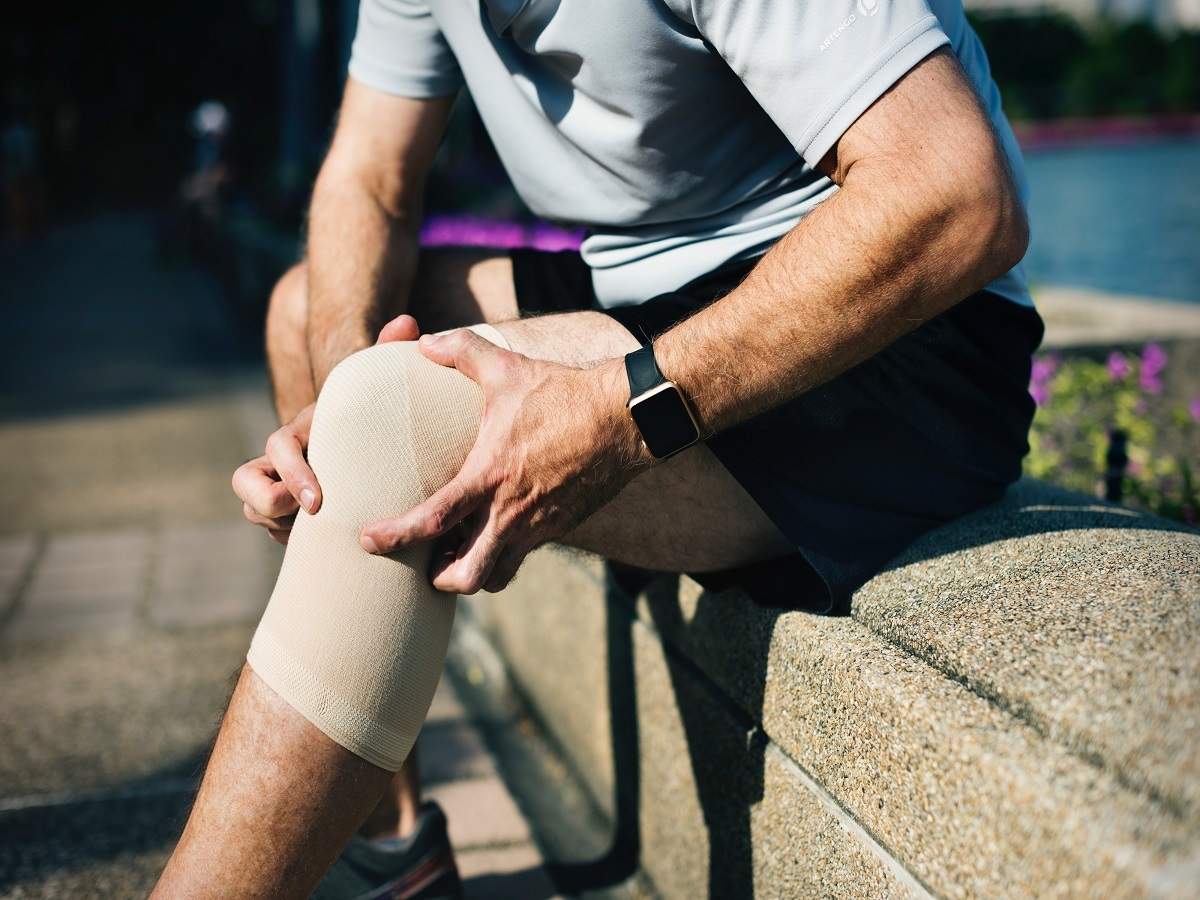
What is “Runner’s Knee”?
“Runner’s knee” refers to a usually dull but not always diffuse pain in the front or outer part of the knee and describes a broad group of pathological conditions involving the patellofemoral joint or the iliotibial band.
It mainly affects runners but also any athlete engaged in intense activities that involve frequent knee bending, such as cross fit, cycling, jumping, soccer, skiing, and basketball.
Runner’s Knee / What are the symptoms?
The most common symptoms of “runner’s knee” are:
- Pain usually located in the front part of the knee, although it can also be at the back or outside, during running or immediately after
- Pain that worsens when bending the knee, such as when walking, running, kneeling, sitting, or descending stairs
- Weakness or a feeling of instability when standing up after sitting for a long time
- Hearing “clicks” or creaking sounds in the knee when bending or straightening it
What causes it?
The most common predisposing factors are:
- Weak or unbalanced muscles of the thigh, hip, and shin
The quadriceps muscles stabilize the knee during bending or straightening. If they are weak or tight, the kneecap may not stay on the correct track during movement, causing increased pressure on the cartilage.
Weak gluteal muscles may predispose to increased internal rotation of the femur and increased pressure of the kneecap on the femoral trochlea (the groove on the front of the femur), while tight gluteal muscles can cause friction of the iliotibial band on the femur.
Tight hamstrings
A tight Achilles tendon
Overuse from excessive training, usually involving repeated exercises with deep knee bending like deep squats - Anatomical reasons
A kneecap positioned anatomically high in the knee joint may cause increased pressure between it and the femoral trochlea.
Foot problems—such as flat feet (pes planus), overpronation, or high arches (pes cavus)—can alter the load on the knee and cause pain.
Poor alignment from the hip to the foot may result in excessive pressure on certain points of the knee. - Knee injury
- Patellar chondropathy (wear under the kneecap resulting from acute injury or repeated microtraumas)
How is it diagnosed?
The doctor diagnoses runner’s knee based on the patient’s medical history and clinical knee examination. Imaging tests such as X-rays or MRI may be required for better evaluation.
Can runner’s knee be prevented?
Prevention includes:
- Proper warm-up and stretching exercises before starting athletic activity
- Gentle stretching and cool-down exercises after exercise
- Strengthening weak muscle groups and restoring muscle balance
Additionally, the following are recommended:
- Gradually increase the intensity and duration of your training
- Wear appropriate sports shoes with good shock absorption and foot support
- Replace shoes with new ones when they lose their shape (usually every 700-800 km)
- In cases of anatomical foot problems, wear proper orthotic insoles after a foot pressure analysis
- Avoid running on hard surfaces such as asphalt or concrete
How is it treated?
Mild cases are treated with ice application (10-15 minutes, 3-4 times a day), rest, and simple compression with an elastic bandage.
Once acute symptoms subside or during recovery, avoid activities that strain the knee and worsen the pain, such as running, deep squats, but also avoid prolonged immobilization. Perform alternative exercises that do not irritate the knee, such as swimming.
If symptoms persist, it is advisable to visit a specialized orthopedic surgeon or sports doctor to confirm the diagnosis, exclude other knee conditions, and identify the cause of the problem.
If necessary, follow a physiotherapy rehabilitation program focusing on muscle strengthening.
For persistent cases, modern biological therapies such as Platelet-Rich Plasma (P.R.P) injections may be considered. This treatment uses the patient’s own cells containing growth factors to promote healing.
If pain continues despite these treatments or there are significant damages, though rare, arthroscopy might be needed. Arthroscopy is a minimally invasive surgical technique that allows the surgeon to look inside the knee joint through a small incision, identify damage, and immediately repair it. The surgeon can remove damaged cartilage from the kneecap or femur and correct the kneecap’s position, reducing excessive pressure on the cartilage and supporting structures around the front of the knee.
When will my knee feel better?
Recovery time depends on your body and the injury’s severity. During recovery, you don’t need to completely stop exercising. Try something new, such as swimming or cycling, as long as it doesn’t cause discomfort.
Whatever you do, don’t rush. Returning to training too soon before your knee fully heals may cause a relapse.
Returning to running
A gradual increase in running distance and intensity (not more than 10% per week) plays an important role during the return to running. Don’t neglect proper warm-up, stretching exercises, and strengthening exercises.