
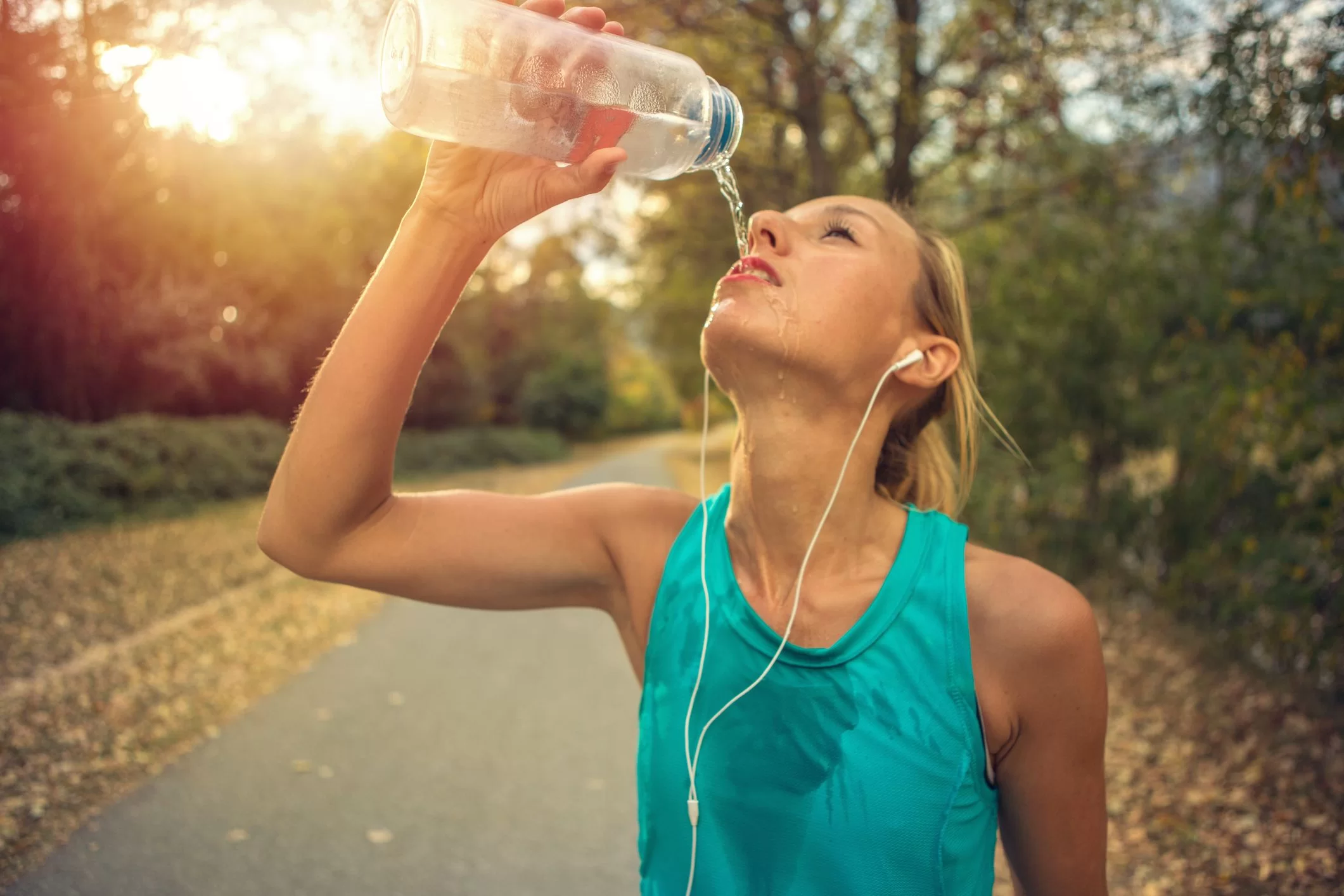
Whenever you train in high temperatures, it is advisable to take the following precautions to avoid putting your health at risk.
Protect Yourself from the Sun
Apply sunscreen with a sun protection factor (SPF) of 30 or higher, 20–30 minutes before running. Use a sweat-resistant (waterproof) sunscreen that protects against both UV-A and UV-B rays. Sunscreen lowers your body temperature and helps you feel cooler.
Choose a lightweight hat with a secure and comfortable fit and a wide brim to protect you from the sun. There are special running hats made from synthetic fibers that wick away sweat and have ventilation holes to allow airflow.
Don’t forget to wear sunglasses. Your sunglasses should block UV-A and UV-B rays, fit well to prevent slipping, and be lightweight so they don’t tire you.
Dress Appropriately
Wear lightweight, comfortable clothing in light colors to reflect the sun’s rays. Choose sportswear made from UPF (Ultraviolet Protection Factor) fabrics that protect against UV radiation and do not become soaked with sweat but allow better evaporation.
Stay Hydrated
Drink water before, during, and after your workout or race.
Start drinking water 2–3 hours before training (or race). In intense heat or before long workouts, add electrolytes to your water. For exercise lasting longer than one (1) hour, fluids should contain 0.5–0.7 grams/liter of sodium.
Replacing fluids lost through sweat facilitates blood circulation, which boosts your performance. A 2% dehydration can reduce your performance by 20%.
Drink water even if you’re not thirsty. By the time you feel thirsty, you are already dehydrated. Wear a waist belt with a special pocket for your bottle.
Heat dehydrates you faster, so reduce your caffeine and alcohol intake from the day before, as high amounts increase the risk of dehydration.
Replace Electrolytes
If you run for more than half an hour, it is important to replace electrolytes (fluids and minerals) lost through sweat by either taking ready-made capsules or effervescent tablets, or by drinking a commercial sports drink available in pharmacies or sports stores.
Choose the Right Time to Exercise
Run during the cooler parts of the day, either very early in the morning or late in the afternoon. Plan your routes in shaded areas and where you have access to water.
Do Not Increase Your Pace
In high temperatures, do not try to set a new record. Focus only on completing your training safely without risking a serious heat-related illness. Maintain your exercise intensity and duration at normal levels.
Listen to Your Body
If you feel excessively hot, reduce your exercise intensity or take a break.
If you experience discomfort or symptoms like cramps, headache, nausea, rapid heartbeat, exhaustion, or confusion, stop running, find shade, and drink water. Always carry your mobile phone so you can contact someone for help if needed.
When you return home, drink plenty of water and replenish lost fluids and salt with salty snacks and sports drinks. A cool shower and cold compresses on your head will help.
It goes without saying that athletes who train regularly should undergo an annual preventive cardiac check-up (ECG, stress test, and heart ultrasound/triplex).