
What is Iliotibial Band Syndrome (ITBS)?
Iliotibial Band Syndrome is a fairly common condition among athletes. The most frequent symptom is pain on the outer side of the knee.
Anatomy
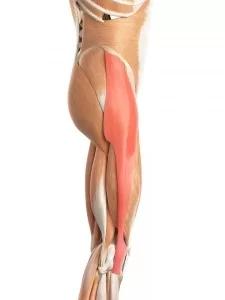
The iliotibial band (IT band) is a thick band of fascia that originates at the iliac crest (upper part of the pelvis) near the hip joint and inserts below the knee joint, attaching to the proximal tibia, the patella, and the tendon of the biceps femoris. It is formed by the convergence of fascia from the hip flexors, abductors, and extensors.
ITBS is caused by excessive friction of the distal portion of the band as it moves over the lateral femoral epicondyle during repetitive knee flexion and extension. This results in irritation and inflammation.
Contributing Factors to ITBS:
- Weakness in hip muscles, especially the gluteus medius
- Excessive foot pronation, leading to internal rotation of the tibia and increased tension on the IT band
- Pre-existing thickening of the iliotibial band
- Leg length discrepancy
- Overtraining or excessive mileage
Symptoms of ITBS
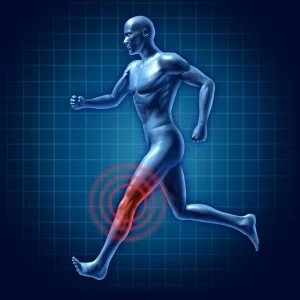
The main symptom is pain on the outer side of the knee. Initially, the pain may be diffuse, but with continued activity, it often becomes sharp and localized around the lateral femoral epicondyle. Typically, the pain appears after running or after several minutes into a run. In more advanced cases, the pain can start at the beginning of activity and may even be present at rest.
Many patients report worsened pain when running downhill or after sitting for a long period.
How is ITBS Diagnosed?
Diagnosis is based on medical history and clinical examination.
Clinical assessment includes:
- Checking for tenderness over the lateral femoral epicondyle
- Assessing muscle strength in the hip flexors, abductors, and extensors
- Evaluating IT band tension using the Ober’s test
- Identifying muscle spasms (trigger points) in the gluteus medius, vastus lateralis, and biceps femoris
- Examining for excessive foot pronation
In unclear cases, an MRI may assist with diagnosis.
Get the Help You Need Today!
What is the Appropriate Treatment for ITBS?
Initial Phase – Reduce Inflammation
Rest
A period of rest from running is necessary. Continuing to run is likely to worsen the condition. To maintain fitness, athletes are encouraged to switch to low-impact activities such as swimming or cycling that do not irritate the IT band.
Ice Therapy
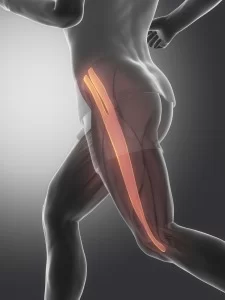
Ice can help reduce inflammation. Apply an ice pack for 10–15 minutes every hour initially, and later, 2–3 times a day as symptoms improve. Avoid direct contact of ice with the skin to prevent frostbite.
Anti-Inflammatory Medications
Non-steroidal anti-inflammatory drugs (NSAIDs) may help in the early stages. Always consult a physician before use.
Addressing Underlying Causes
Stretching Exercises
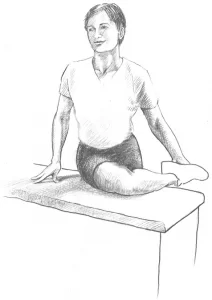
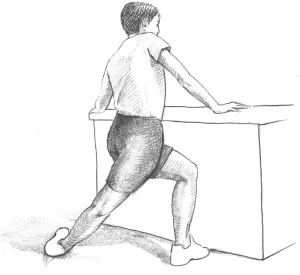
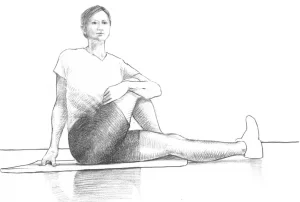
Stretching the tensor fasciae latae, the IT band, and the hip abductors is crucial if tightness is present.
Sports Massage
Regular massage of tight or spastic muscles by a trained physiotherapist can reduce friction and relieve symptoms.
Strengthening Exercises
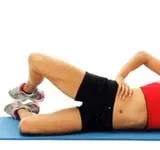
Strengthening the hip abductors helps prevent internal rotation of the knee during running, reducing IT band friction. Special focus should be given to strengthening the tensor fasciae latae and the gluteus medius.
Get the Help You Need Today!
Physiotherapy
An experienced physiotherapist can be invaluable. In addition to massage, they can guide you through tailored stretching and strengthening programs. Anti-inflammatory modalities like ultrasound and TENS therapy may help reduce inflammation and accelerate recovery.
Acupuncture may also assist with pain relief and inactivation of trigger points.
Biological Therapies
In persistent cases, modern biological therapies such as Platelet-Rich Plasma (PRP) injections may be considered. This treatment uses the body’s own platelet-rich plasma to promote healing in chronic inflammatory conditions.
Cortisone
In persistent cases, a local cortisone injection—a powerful anti-inflammatory—can be administered as a complementary measure alongside the other treatments.
Is Iliotibial Band Syndrome ever treated surgically?v
The treatment of Iliotibial Band Syndrome (ITBS) is primarily conservative. Surgery is considered only in rare cases where conservative measures fail to provide relief. The surgical procedure involves a release or partial excision (approximately 2 cm) of the posterior portion of the iliotibial band at the point where it crosses the lateral femoral epicondyle.
How is the return to running managed?
Finally, it’s important to emphasize that a gradual return to running is crucial. This includes progressively increasing the mileage and intensity—no more than a 10% increase per week—while continuing with stretching and strengthening exercises to prevent recurrence.