
What is an Anterior Cruciate Ligament (ACL) Tear?
One of the most common sports-related knee injuries is a tear of the anterior cruciate ligament (ACL). Athletes who participate in high-demand sports such as football, skiing, basketball, volleyball, handball, and generally any sport involving sudden changes in direction are prone to ACL injuries.
Anatomy
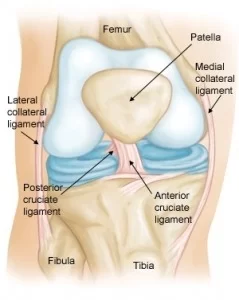
The knee joint is where the distal end of the femur meets the proximal end of the tibia and the kneecap (patella). The femur and tibia are connected by ligaments. The knee has four main ligaments that stabilize the joint: two collateral ligaments and two cruciate ligaments.
Collateral Ligaments
These are located on each side of the knee—the medial collateral ligament (MCL) on the inside and the lateral collateral ligament (LCL) on the outside. They help control side-to-side stability.
Get the Help You Need Today!
Cruciate Ligaments
There are two cruciate ligaments: the anterior cruciate ligament (ACL) and the posterior cruciate ligament (PCL). They are located within the knee, in the center of the joint between the femoral condyles, and cross each other forming an “X.”
- The PCL originates from the back part of the tibia, runs upward and forward, and inserts on the inner surface of the medial femoral condyle. It prevents the tibia from sliding too far backward relative to the femur.
- The ACL originates from the front part of the tibia, runs upward and backward, and inserts on the inner side of the lateral femoral condyle. It prevents the tibia from sliding too far forward relative to the femur and contributes to rotational stability.
ACL Tear
In about half of the cases where there is an ACL tear, there are also injuries to other parts of the knee such as the menisci, articular cartilage, or other ligaments.
ACL injuries are classified by severity as follows:
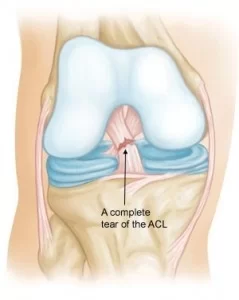
- Grade I sprain: The ligament is slightly stretched but remains intact and provides stability to the knee.
- Grade II sprain: The ligament is stretched and partially torn.
- Grade III sprain: The ligament is completely torn and no longer provides stability to the knee.
- Partial ACL tears are rare. Most ACL injuries are complete or nearly complete tears.
Mechanism of ACL Injury
An ACL tear typically occurs through one of the following mechanisms:
- Sudden change in direction
- Abrupt stop or deceleration
- Improper landing from a jump
- Direct blow, usually during contact with another player
Several studies have shown that female athletes have a higher incidence of ACL tears compared to male athletes in some sports. Proposed reasons include differences in physical conditioning, muscle strength, neuromuscular control, anatomical differences such as pelvic structure and limb alignment, increased ligament laxity, and the effects of estrogen on ligament properties.
What Are the Main Symptoms of an ACL Tear?
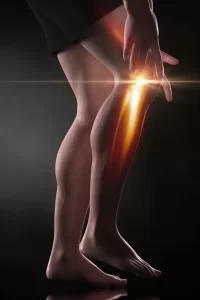
At the moment of injury, the patient may feel or even hear a “pop” and immediately feel the knee give out and become unstable. This is often followed by pain and swelling—specifically hemarthrosis (bleeding into the joint), which becomes noticeable within the first 24 hours. There may also be a decreased range of motion.
Over the following weeks, the hemarthrosis is absorbed, pain subsides, and the patient may return to everyday activities without significant issues.
However, during high-demand activities such as sports, the knee may feel unstable or unreliable, increasing the risk of further injury to other knee structures like the articular cartilage or menisci.
How Is an ACL Tear Diagnosed?
Diagnosis is based on the injury history, mechanism of trauma, symptoms, and clinical examination. The orthopedic doctor will assess knee stability using specific tests and compare the injured knee to the uninjured one.
Although a plain X-ray does not show soft tissue injuries, it may reveal associated fractures.
Confirmation of the diagnosis is done via MRI, which also helps detect any accompanying injuries.
What is the appropriate treatment for an anterior cruciate ligament (ACL) tear?
Initial Management in the Acute Phase Includes:
- Rest with partial weight-bearing using crutches
- Ice therapy
- Compression
- Elevation of the leg
Following this, the treatment of an ACL tear depends on the individual needs of each patient. Factors such as age, daily activity levels, type of occupation, level of athletic activity, any accompanying injuries, and the degree of knee instability will determine whether the patient follows conservative or surgical treatment.
For example, a young athlete wishing to continue sports activities is more likely to require surgical treatment compared to an older, less active person who may return to daily activities without issues through conservative management.
ACL Tear: When is Conservative Treatment Recommended?
A torn ACL cannot heal on its own without surgery. However, older patients with low activity levels and no associated injuries can follow a conservative treatment plan and respond quite well.
After the acute phase, conservative treatment includes a complete rehabilitation program with strengthening and proprioception exercises under the guidance of a specialized physiotherapist.
If, after completing this rehab program, the patient still experiences instability or suffers a new injury, surgical intervention is then required.
Get the Help You Need Today!
ACL Tear: When is Surgical Treatment (Ligament Reconstruction) Necessary?
Young patients with symptoms of instability and high levels of activity should be treated surgically. Surgical treatment involves reconstruction of the ACL. This procedure, known as anterior cruciate ligament reconstruction (ACLR), is usually performed using a graft from the patient’s own body. The grafts used include the hamstring tendons, part of the patellar tendon, or, more rarely, part of the quadriceps tendon. In special cases, such as when there are multiple ligament injuries, synthetic grafts may be used.
There are pros and cons to each type of graft. A thorough discussion between the patient and an orthopedic specialist will help determine the most appropriate choice.
There are various ACL reconstruction techniques, including single-bundle and double-bundle approaches, as well as different graft fixation methods. The goal is to restore the normal anatomy and stability of the knee as much as possible. The graft serves as a scaffold for the body to build a new ligament.
The surgery is performed arthroscopically, without opening the knee joint, through small keyhole incisions. The arthroscopic technique has the following advantages:
- Less invasive
- Less painful
- Faster return to daily activities
- No hospitalization required
The advanced All-Inside arthroscopic technique offers significantly improved functional and aesthetic outcomes for ACL tear reconstruction.
After surgery, the patient can stand with the aid of a functional brace and usually be discharged the same day or, rarely, the following morning.
Modern biological treatments using stem cells can further enhance and speed up graft healing and integration.
Rehabilitation
Physical rehabilitation after an ACL tear is a critical and integral part of the patient’s return to activities—regardless of whether the approach is surgical or conservative.
For surgical patients, physiotherapy initially focuses on restoring full range of motion in the knee joint and preventing further muscle loss. Later, it includes strengthening exercises designed to protect the new ligament. In the final stage, specialized exercises are introduced to help the patient return to sports.
Since the full integration and transformation of the graft into a functional ligament takes several months, a return to intense sports activities may take up to six months.