
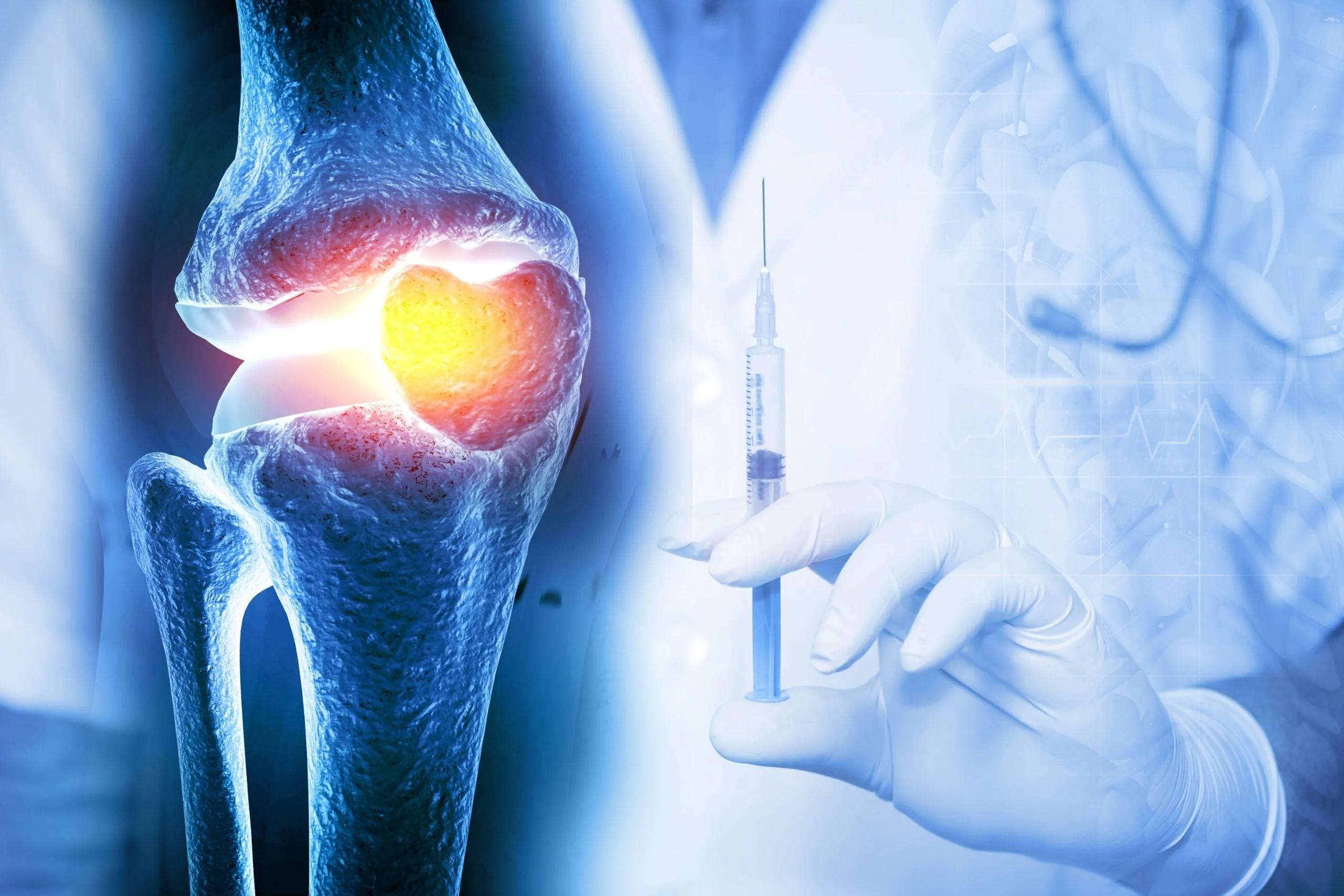
In cases of early to moderate knee osteoarthritis, and according to the new international guidelines issued by the European Society of Sports Traumatology, Knee Surgery and Arthroscopy (ESSKA), PRP therapy is considered a highly promising treatment option. It aims to reduce pain and improve knee function. Moreover, it is regarded as more effective compared to hyaluronic acid or cortisone injections.
What is PRP?
PRP (Platelet Rich Plasma) therapy is a biological treatment for musculoskeletal conditions. It involves injecting plasma rich in platelets (a concentrate of platelets and growth factors) into the affected area. This approach is believed to enhance healing and regeneration of damaged tissues (tendons, cartilage, bones, and muscles), while also reducing or eliminating pain — all in a natural and risk-free way.
Today, PRP therapy is widely used in major orthopedic centers and athletic organizations for treating orthopedic conditions.
PRP and Knee Osteoarthritis
Knee osteoarthritis is a degenerative disease characterized by the progressive wear and destruction of the cartilage in the knee joint. In this context, PRP can improve the microenvironment of the affected joint, helping to relieve pain, improve mobility, and slow down the progression of the disease.
The treatment protocol typically includes 2 to 4 injections, with intervals of 1 to 3 weeks between sessions.
How is PRP Prepared and Administered?
The technique involves drawing a small amount of blood (10–30 ml) from a peripheral vein of the patient. The blood is then placed in a special centrifuge.
The centrifuge separates the platelet-rich plasma from the other blood components. The concentrated plasma is then injected directly into the area of damage.
The PRP injection is performed in the orthopedic clinic and the entire procedure takes no longer than 20 minutes.
The patient is advised to rest for the next two days following the injection. Additionally, anti-inflammatory medications should be avoided for one week before and after the procedure.
What Are the Advantages of PRP Therapy?
- Faster and more complete tissue healing
- Reduction or even elimination of pain
- Faster recovery of mobility and quicker return to daily activities and sports
- Safe and painless method
- No risk of rejection, as the material comes from the patient’s own body
- Utilizes the body’s natural healing capabilities