
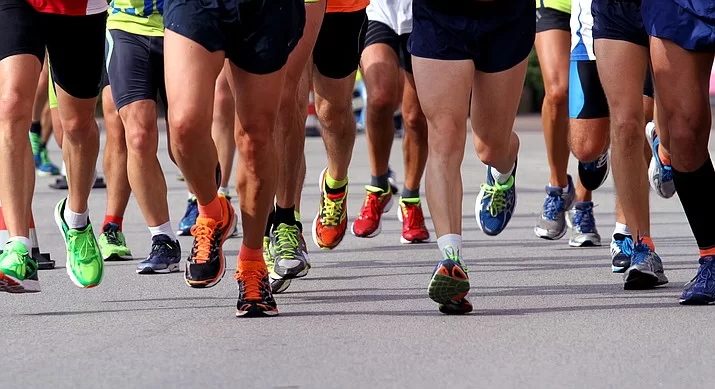
If you are a runner, especially a marathon runner (long distances), it is very important to choose the right running shoes.
“Right” running shoes are those that make you feel 100% comfortable and stable, protect you from shocks, foot strain, and injuries, and ultimately help you perform at your best.
The type of running shoes you need depends on:
- your running style, which part of your foot touches the ground first, your stride frequency and length
- your weight
- the type of running, whether you want shoes for fast running (sprints or interval training) or slower long-distance runs (long runs)
- how fast you are
- if you have any specific problem or injury (e.g., Achilles tendonitis)
Choose the type of shoe that fits you
Everyone has a different foot anatomy, so not all shoes fit all runners.
The main types of running shoes are:
- Cushion: mainly shoes with an emphasis on shock absorption. Usually suitable for runners with neutral foot strike or supination
- Stability: suitable for runners with mild to moderate overpronation, with reinforcement (support) on the inside of the sole
- Motion Control Shoes: even more reinforced, suitable for runners with severe overpronation, offering maximum support
- Performance and Racing: lightweight shoes with minimal shock absorption for fast running
A simple and empirical way to understand which type of shoes suit you is to observe where your old running shoes are worn out most. If they are more worn on the inner side, you have overpronation and need shoes with maximum support. If the wear is mostly on the outer side, you need shoes with greater shock absorption.
Also, heavier runners need shoes that provide more shock absorption, while faster runners with a neutral foot strike can choose a lighter, faster shoe.
Another feature that distinguishes running shoes is the shoe drop. The shoe drop determines how the runner’s foot strikes the ground. Shoes with a high drop (greater heel-to-toe height difference) make the foot land first on the heel, while shoes with a low drop make the foot land more on the midfoot.
The difference between high and low drop relates purely to the runner’s style. Faster runners usually prefer a low drop, while runners seeking a comfortable run prefer shoes with a higher drop.
So, depending on your foot type and running style, and with the help of an expert salesperson, you can choose the right shoes. In some cases, especially if you experience foot pain, getting a gait analysis at a specialized center can help even more.
Choose the right size
Try on the shoes before buying. There is often a size difference between regular shoes and running shoes, even among shoes from the same brand.
Try them at the right time
Your feet swell when you run, so try on running shoes after training or in the afternoon (when feet are more swollen).
Pay attention during the fitting
- wear the same type of socks you use when you exercise
- make sure the toe box is roomy enough so you can freely move your toes
- the heel should fit snugly so the shoes don’t slip when you walk
It’s good to try the shoes on a treadmill available at many specialized stores.
Focus only on your needs
Don’t be swayed by friends’ opinions on the best shoe. Remember, what’s best for one runner may not be best for another.
Also, don’t buy mainly because you like the look or because the shoes are heavily advertised. The right choice should always be based on your needs.
And don’t forget, shoes should be replaced every 700-900 kilometers to continue protecting you. So it’s good to have two pairs to alternate if you train 4 or more times a week.
After considering all the above and making your choice, be sure to run 50-70 kilometers in your new shoes before racing, so they break in and you confirm they’re comfortable.
I hope you find the shoes that suit you perfectly!