
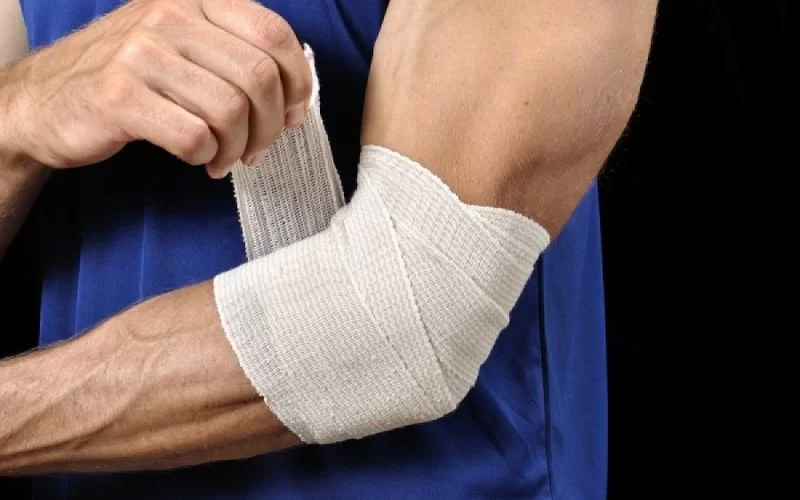
Epicondylitis is a painful condition of the elbow that appears as a result of repetitive movements or repetitive lifting of weight (overuse of the hands). Some people perform the same repetitive movement daily either because of their job or some activity, which causes micro-injuries leading gradually to inflammation, microtears, and mucoid degeneration of the tendon.
It is more common in women and in people aged 30-50 years.
It occurs in athletes and manual workers who follow a specific movement pattern daily and for long hours. Some professions frequently affected by epicondylitis include plumbers, painters, butchers, carpenters, cooks, pianists, and secretaries (and generally those who work many hours on a computer). Sports commonly linked to epicondylitis are tennis, golf, throwing sports, swimming, fencing, and climbing.
However, there are cases where someone develops the condition without being a manual worker or athlete (idiopathic epicondylitis).
Epicondylitis / Types
There are two types of epicondylitis depending on where it appears: medial (inner) and lateral (outer). On both sides of the elbow are the epicondyles (medial and lateral epicondyles), which are two bony prominences from which the forearm muscles (the part from the elbow to the wrist) originate.
Lateral epicondylitis, which is more common, is a tendinitis or tendinopathy (inflammation–degeneration of the tendons) of the forearm muscles that extend the elbow (extensors) and attach to the lateral epicondyle. It is also known as tennis elbow. The pain starts from the tendon on the outer side of the elbow and may extend to the forearm and wrist.
Medial epicondylitis is tendinitis of the muscles that flex the wrist, rotate the forearm inward (pronation), and originate on the inner side of the elbow. It is known as golfer’s elbow. The inflammation is located where the tendons originate from the epicondyle on the medial side of the elbow.
Symptoms
The main symptoms are elbow pain, which may extend to the forearm and wrist during hand use, and weakness in the wrist when the patient tries to grasp an object. These symptoms develop gradually and worsen with continued use of the hand. In some cases, even a handshake can be very painful.
In lateral epicondylitis, the patient may feel pain even when trying to hold a glass or grasp a doorknob. In medial epicondylitis, mild stiffness and more rarely, numbness in the fingers may coexist.
Diagnosis
Epicondylitis is usually diagnosed by a simple clinical examination by a doctor. During the exam, the doctor performs tests for local tenderness on both the medial and lateral sides of the elbow, as well as specific resisted flexion and extension tests of the elbow. The patient’s medical history combined with the clinical examination is usually enough for diagnosis.
If there is doubt, the doctor may request MRI, ultrasound, or X-rays to rule out other conditions. More rarely, a nerve conduction study—electromyography—may be necessary to exclude nerve compression.
Treatment and Management
Initially, treatment of epicondylitis involves avoiding the activity that caused it.
If the pain is severe, the patient may need to take analgesics and anti-inflammatory medication. Additionally, applying ice (ice therapy) 3-4 times daily for 15 minutes each time can help.
It is important to determine whether the movement or technique used is incorrect and causes the injury. Especially in sports, the patient should ask a coach to explain the proper movement (e.g., how to hold the racket correctly). Also, equipment adjustment may be necessary, for example, using a smaller or softer tennis racket.
Most patients (especially with lateral epicondylitis) will notice symptom improvement by following simple advice such as rest, ice, anti-inflammatory medication, stretches, and eccentric strengthening exercises.
Even if improvement occurs, patients should continue doing exercises and try to reduce the movements that cause the problem because there is a risk of recurrence and chronicity.
Effective are also gentle stretches followed by eccentric strengthening exercises. It is advisable that these be taught by a physical therapist to avoid further injury.
Physical therapists can also help reduce pain and promote tendon healing using various methods, mainly shock wave therapy and manual therapy.
If the patient cannot avoid the activity that aggravates the epicondylitis, a special brace for epicondylitis (counterforce brace) can be worn during the aggravating movement.
If these methods are ineffective, injectable treatment with P.R.P (Platelet-Rich Plasma) in the injured area may be applied. The procedure usually takes less than 20 minutes, is painless, does not cause allergic reactions, and has no complications.
Less commonly, corticosteroid injections may be given.
Surgical Treatment
If 6 months of conservative treatment pass without symptom improvement, a minimally invasive surgery may be required. During this procedure, using microscopic instruments and very small incisions, the scarred and degenerated tissue is removed, and the healthy tendon is reattached to the epicondyle. The patient can usually be discharged the same day.
Cost of Treatment
The appropriate doctors for treating epicondylitis are orthopedic surgeons and physiatrists. The role of the physical therapist is also very important, who in cooperation with the doctor completes the therapeutic regimen for the patient.
The cost of epicondylitis treatment depends on the therapeutic approach. The cost of medications and physical therapy sessions should also be considered.