
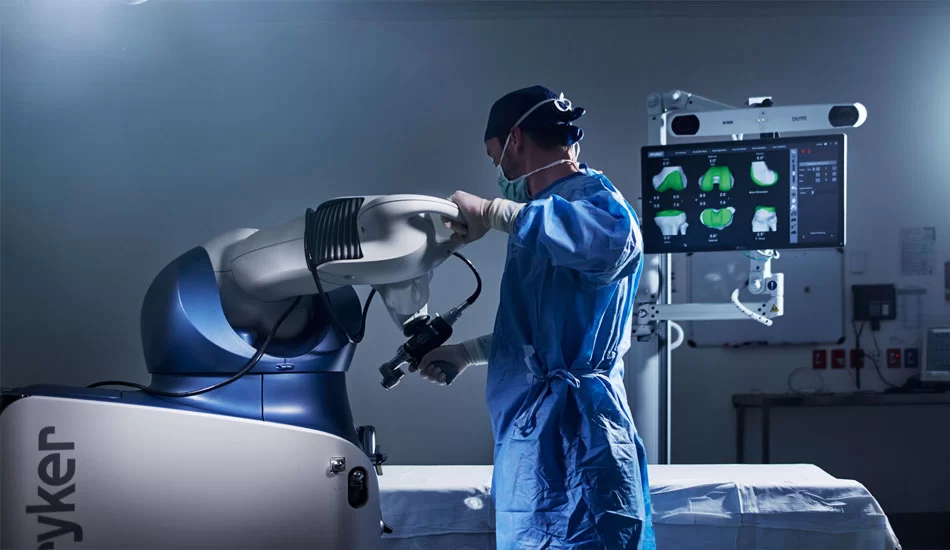
A revolution in arthroplasty has been brought about by robotic surgery, digital navigation, minimally invasive surgery (MIS) techniques, and new, highly durable materials. These offer millimeter-level precision, smaller incisions, and personalized procedures, resulting in shorter hospital stays (usually 1 day), faster recovery, natural movement, and effective pain relief.
Today, arthroplasty is no longer considered a major, long-lasting surgery as traditionally believed. The latest advances have changed the landscape, making modern arthroplasty simpler, less invasive, safer, free from the complications of older classical surgical methods, and with significantly higher success rates.
What is Arthroplasty?
Arthroplasty replaces the damaged surface of a major joint (shoulder, hip, knee), usually due to arthritis (commonly in people over 60 years old) or traumatic causes, with an artificial (metal, plastic, or ceramic) surface that maximizes the natural joint movements and provides walking stability for many years.
Latest Advances and Benefits for the Patient
The advances concern surgical techniques, technologies, and materials.
The new techniques are minimally invasive, with much smaller incisions that cause minimal trauma to the bone and soft tissues, thus reducing postoperative pain and the likelihood of intraoperative or postoperative complications. The surgical approach can be anterior, lateral, or posterior.
Combined with fast-track recovery protocols, they allow immediate mobilization of the operated joint, usually 1-2 days of hospitalization instead of 3-4 days, faster recovery, and return to daily life.
Robotic technology allows the creation of a 3D virtual model of the unique anatomy of each patient’s joint and the development of a detailed preoperative plan. Based on this plan, the properly trained orthopedic surgeon prepares the bone for the implant and then places it in the most suitable and precise position. Furthermore, advanced technology guides the surgeon during the procedure only within the pre-planned boundaries, preventing any mistakes and reducing the risk of complications.
The use of advanced navigation systems allows the orthopedic surgeon to take the necessary precise and highly detailed measurements of the joint. In hip or knee arthroplasty, the navigation system provides the ability to accurately calculate the length of the operated limb to ensure patient limb-length equality (no difference between the operated and the original limb length) and implant alignment. This greatly improves postoperative function of the operated hip/knee, as the other limb is not overburdened and the patient does not limp.
Accurate implant placement and alignment significantly increase implant longevity. Meanwhile, the implants used are made of special advanced synthetic materials with high durability.
Advantages
- Smaller incisions – minimized trauma to bone and soft tissues
- Less blood loss
- Millimeter-precise implant placement
- Immediate mobilization of the operated joint
- Shorter hospital stay
- Lower risk of complications and need for revision surgery
- Reduced postoperative pain
- Faster recovery and return to activities
- Better functional outcome
- Natural joint feel
- Longer implant lifespan