
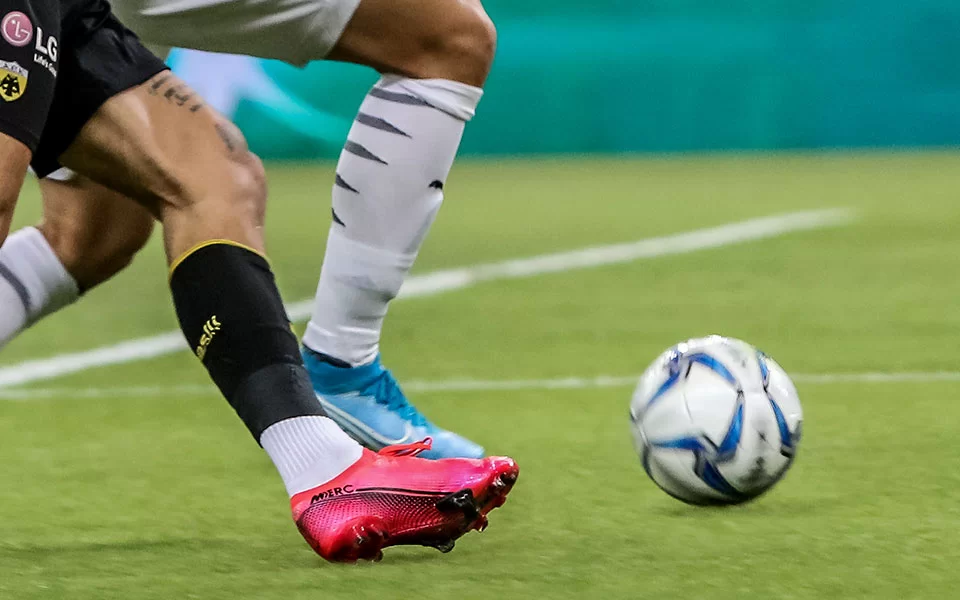
The rupture of the anterior cruciate ligament (ACL) is one of the most common sports injuries in the knee. It is more frequently observed in athletes of football (soccer), skiing, basketball, volleyball, handball, and generally in sports involving contact and sudden changes of direction.
In the past, an ACL rupture was a nightmare for an athlete as it could mean the end of their sports career. However, with modern surgical techniques, the knee can be fully stabilized and the patient can return to their previous sports activities after a period of rehabilitation.
Below, we provide answers to the most frequently asked questions.
1. What is the anterior cruciate ligament and how is it injured?
The anterior cruciate ligament, along with the posterior cruciate ligament, the collateral ligaments, and the thigh muscles, are the main stabilizing elements of the knee. It controls the movements of the joint, protects the knee from hyperextension, prevents the forward displacement of the tibia relative to the femur, and contributes to the rotational stability of the knee.
ACL rupture (injury) happens through the following mechanisms:
- Sudden change of direction by the athlete
- When the athlete stops or slows down abruptly
- During an abnormal landing after a jump or fall
- From a direct blow, usually during a collision with another athlete
- From sudden twisting injury, such as when a ski boot gets stuck in the snow
2. Is it true that ACL ruptures are more common in women?
Yes, it is true. According to many studies, female athletes have a higher incidence of ACL rupture compared to male athletes in the same sport. Possible causes include anatomical differences involving the pelvis, different alignment of the lower limbs, differences in muscle strength and neuromuscular control, increased ligament laxity in women, and the effect of estrogen on ligaments.
3. Can ACL rupture be prevented?
Yes, it can largely be prevented by following specially designed training programs focusing on proper neuromuscular control of the knee. These programs include plyometric exercises, balance exercises, and strengthening-stability exercises which should be applied consistently and not just during the athlete’s preparation period.
4. How do you recognize an ACL rupture?
At the moment of rupture, the athlete may feel or hear a “crack” and immediately feel the knee giving way. Usually, the knee swells and hurts immediately after the injury or within the first 24 hours, and the range of motion decreases. Over the following weeks, with conservative treatment, symptoms subside and the patient—if not engaging in sports—can return to normal daily activities without significant discomfort.
5.Πώς γίνεται η διάγνωση;
Diagnosis is based on detailed history of the injury, injury mechanism, symptoms, and clinical examination. The orthopedic surgeon will check knee stability with special clinical tests. X-rays can show any associated fractures, while MRI will confirm the diagnosis and reveal any concomitant injuries. In about half of ACL ruptures, there are associated injuries to menisci, cartilage, other ligaments, or bone bruises.
6. What is the “correct” treatment?
The “correct” treatment, whether conservative or surgical, varies for each patient and depends on their individual needs. The specialized orthopedic surgeon will decide the treatment type, considering:
- The patient’s age
- Their daily requirements
- Their type of work
- Their sports activities
- Any associated injuries
- The degree of instability caused by the rupture
7. What is conservative treatment and when is it indicated?
Conservative treatment includes a comprehensive rehabilitation program with strengthening and proprioception (balance) exercises guided by a specialized physiotherapist. It can have relatively good results in older individuals who do not have significant instability symptoms, do not participate in sports, and generally have a low activity level. It is also indicated for patients with knee arthritis.
8. When is surgical treatment recommended?
In young athletes and active individuals with complete ACL rupture, conservative treatment is often inadequate. Since the ACL has a limited healing ability compared to other ligaments, knee instability usually persists and function is not restored. For athletes who want to return to sports as soon as the acute phase passes, instability can cause further serious injuries to the knee, such as meniscus tears and cartilage damage.
In these cases, surgery is recommended to fully restore knee stability so the patient can return to their previous activity level.
9. How is the surgery performed?
The orthopedic surgeon replaces the ruptured ACL (ligament reconstruction) with an autograft (tissue from the patient’s own body). The operation is done arthroscopically, a minimally invasive technique through small incisions.
Specifically, tendons (grafts) from the patient’s knee are placed in the position of the torn ACL. Usually, these are tendons from the hamstring muscles, part of the patellar tendon, or less often, the quadriceps tendon. In very special cases, especially when multiple ligaments are injured, synthetic grafts may be used.
The graft choice is individualized and proper preparation is important for good integration and maximum strength.
Recently, there have been many advances in ACL reconstruction techniques, including single, double, or quadruple tendon bundles, as well as different methods of graft fixation.
During surgery, the surgeon may also repair any additional injuries found. A few hours after surgery, the patient can stand with the help of a functional brace or crutches and return home.
Biological treatments with stem cells and PRP may further enhance and accelerate graft healing and integration.
10. Is there a possibility of suturing the ACL?
Older studies on suturing the torn ligament instead of replacing it with a graft showed poor results. Recently, interest has been renewed, especially for ACL tears involving detachment from the femoral attachment because this area has better blood supply (and greater healing potential). However, studies on this are still ongoing.
11. What is the recovery time after surgery?
Postoperative rehabilitation is an integral and very important part of the patient’s return to activities. Physiotherapy initially focuses on regaining full knee range of motion and preventing muscle mass loss. Then, it includes strengthening exercises designed to protect the new ligament. In the final phase, specialized exercises prepare the patient to return to their sport.
Recovery is a long and often stressful process for the athlete. They must have mental strength and strict adherence to an intensive physiotherapy program for positive outcomes.