
Knee Cartilage Tear: What Is It?
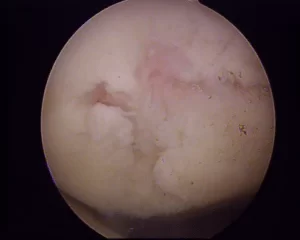
A knee cartilage tear is a common cause of knee pain that can make walking difficult or even painful.
The articular cartilage of the knee can become damaged due to injury or wear down over time as a natural part of aging. Cartilage injuries—such as crushing or detachment of a portion of the articular cartilage—often result from intense sports activities.
Although the knee joint is most commonly affected, similar damage can occur in other joints such as the ankle, hip, shoulder, or elbow.
Anatomy
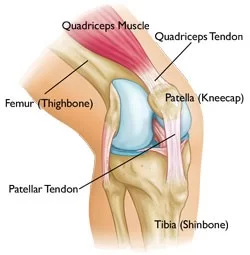
The knee is the largest and strongest joint in the human body. It consists of the lower end of the femur (thigh bone), the upper end of the tibia (shin bone), and the patella (kneecap). The parts of these bones that lie within the joint are covered with a smooth, white, soft tissue called articular (or hyaline) cartilage. This tissue allows the bones to glide against each other, supporting smooth movement and absorbing shocks.
Get the Help You Need Today!
What Are the Symptoms of a Knee Cartilage Tear?
When the cartilage in the knee is damaged, the joint no longer functions smoothly. This can cause pain during movement, swelling due to fluid buildup (effusion), and mechanical issues such as locking or grinding (due to a loose body in the joint). If left untreated, cartilage damage can lead to early onset arthritis (osteoarthritis), which results in the complete deterioration of the joint.
How Is a Knee Cartilage Tear Diagnosed?
Diagnosis is based on the patient’s history, symptoms, clinical examination, and MRI findings.
What Is the Proper Treatment for a Knee Cartilage Tear?
Articular cartilage lacks blood supply (it has no blood vessels), which means the body cannot repair it by generating new, healthy hyaline cartilage. Medical science has developed several techniques to help restore cartilage and delay the progression of arthritis.
Treatment must be personalized due to the condition’s complexity. The orthopedic surgeon considers the patient’s age, lifestyle demands, general health, the location, cause, and size of the cartilage injury, as well as any associated joint damage.
Modern techniques aim to stimulate the growth of new cartilage tissue. Depending on the size and location of the injury, specialized arthroscopic procedures are used in combination with biological therapies and special membrane implants.
Get the Help You Need Today!
Advanced Arthroscopic Techniques
- Debridement of the cartilage lesion, removing only the damaged area up to healthy cartilage edges.
- Microfracture or nanofracture techniques, especially for small to medium-sized lesions. These stimulate the release and migration of cells to help form new cartilage.
- Use of collagen membranes, combined with micro- or nanofracture techniques, mainly for larger defects. The membrane is placed over the lesion to seal it, preventing cell dispersion and supporting new tissue growth.
- Autologous (patient’s own) stem cell or chondrocyte transplantation, with or without collagen membranes, for large cartilage defects. Stem cells are extracted from bone marrow or fat tissue, processed, and infused into a special membrane placed on the lesion.
- Mosaicplasty, or autologous osteochondral cylinder transplantation, which involves transferring small plugs of healthy cartilage from another part of the joint to the damaged area. Suitable for small to medium-sized lesions.
- Transplantation of large cartilage or osteochondral allografts from donors.
New Biological Techniques
- Stem cell injections from cultured adipose (fat) tissue.
- Stem cell injections from bone marrow.
- Collagen gel applied directly to the lesion.
- Platelet-Rich Plasma (PRP) injections, derived from the patient’s own blood.
Recovery
A well-structured rehabilitation program including physiotherapy, strengthening exercises, proprioceptive training, and range-of-motion therapy is essential for patients to return to their normal activities.