
PRP Treatment for Orthopedic Problems and Sports Injuries
PRP therapy (Platelet Rich Plasma) in orthopedics is a modern, biological treatment method for musculoskeletal conditions, which involves injecting plasma rich in platelets (a preparation of concentrated platelets—growth factors) into the affected area. It is believed to enhance healing and regeneration of injured tissues (tendons, cartilage, bones, and muscles) and to reduce or eliminate pain—all naturally and without any risk.
Platelet-rich plasma (PRP) was first used in 1987 during open-heart surgery and has since been applied in other fields such as orthopedics, sports medicine, neurosurgery, and maxillofacial surgery.
Today, it is widely used in major orthopedic centers and sports teams to treat orthopedic conditions. As more athletes began choosing it for the effective and safe management of their injuries, PRP therapy gained worldwide recognition. Famous athletes prefer it to overcome their injuries, such as tennis champion Maria Sharapova, Olympic swimmer Dara Torres, Lakers superstar Kobe Bryant, the world’s number 1 golfer Tiger Woods, and top tennis player Rafael Nadal.
What is PRP Therapy?
Platelets are blood cells that contain a high concentration of growth factors, which are biologically active proteins. These factors are naturally released from platelets and activate a series of reactions that attract and multiply appropriate cells and produce collagen, promoting the healing of tendons, ligaments, cartilage, muscles, and bones after injury or damage.
By properly processing blood, the part with a very high concentration of platelets—and thus a high concentration of growth factors—is separated and called Platelet Rich Plasma (PRP).
How is PRP Prepared and Administered?
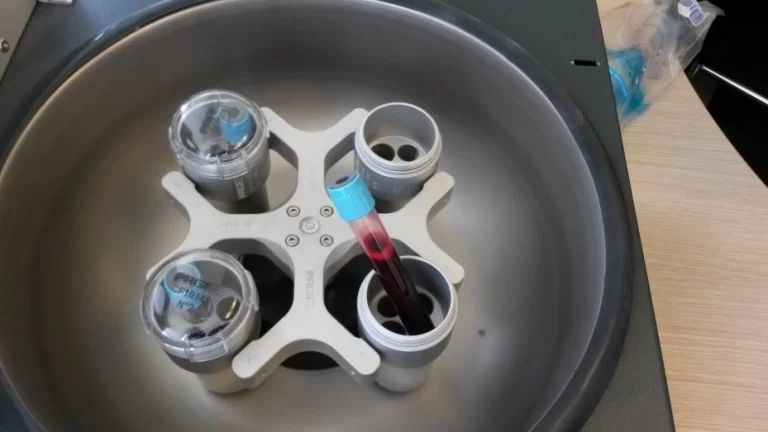
The technique involves drawing a small amount of blood (10-30 ml) from a peripheral vein of the patient, which is then placed in a special centrifuge.
The centrifuge separates the platelet-rich plasma from the other components of the blood.
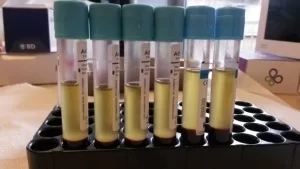
Then, the platelet-rich plasma is injected precisely into the area of injury.
The treatment can be done in the doctor’s office or intraoperatively (during surgery).
Get the Help You Need Today!
PRP Application in the Clinic
The whole procedure takes about 20 minutes and can be performed in the orthopedic office if the proper medical equipment is available and the doctor is properly trained.
In the first few days after the injection, there may be local irritation or pain, but these symptoms last only a short time. Local cold therapy and simple painkillers will relieve symptoms.
Tissue regeneration is a slow process, and the injection results maximize within 4-6 weeks. Physiotherapy can continue one week after the injection.
How Often is PRP Therapy Done in the Clinic?
Some patients respond very well with just one treatment. However, usually 2-3 treatments are necessary, with intervals of 2-4 weeks.
In general, the number of required injections depends on the patient’s age and the severity of the injury.
PRP Therapy for the Knee
According to the new international guidelines of ESSKA (European Society for Sports Traumatology, Knee Surgery and Arthroscopy), in cases of early and moderate knee osteoarthritis, intra-articular PRP injections are considered a more effective treatment option compared to hyaluronic acid or corticosteroid injections.
The treatment protocol includes 2-4 PRP injections spaced 1-3 weeks apart.
Intraoperative PRP Application
For example, PRP may be used during surgeries such as anterior cruciate ligament reconstruction, meniscus repair, cartilage lesion restoration, rotator cuff repair in the shoulder to enhance tissue healing.
Get the Help You Need Today!
Which Conditions Can PRP Therapy Treat?
- Tendinitis – tendinopathies (Achilles, patellar, hamstrings, pes anserinus, rotator cuff, etc.), especially chronic and resistant to conservative treatment
- Lateral and medial epicondylitis (tennis and golfer’s elbow)
- Stenosing tenosynovitis (trigger finger-thumb, de Quervain’s disease)
- Muscle strains (quadriceps, hamstrings, adductors, gastrocnemius, etc.)
- Trochanteric bursitis of the hip
- Cartilage damage in the knee, hip, shoulder, and ankle
- Early osteoarthritis
- Partial ligament tears (sprains)
- Iliotibial band syndrome
- Plantar fasciitis (heel spur, etc.)
- Diabetic foot ulcers and skin necrosis
What Are the Advantages of PRP Therapy?
- Faster and more complete tissue healing
- Reduction or elimination of pain
- Faster recovery of mobility & quicker return to daily activities and sports
- Safe and painless method
- No risk of rejection since the injected material is biological and comes from the patient’s own body
- Based on the body’s own healing properties
- No hospitalization or anesthesia required