
What is Total Knee Arthroplasty?
Total knee arthroplasty is a surgical procedure that replaces the arthritic and damaged surfaces of the knee with a special prosthesis. This operation is performed on patients with advanced arthritis who have previously exhausted conservative treatment options (physical therapy, intra-articular injections of hyaluronic acid, PRP, stem cells).
Knee arthritis is an inflammatory condition characterized by the destruction of the joint’s structural elements, articular cartilage, menisci, and subchondral bone. The main symptoms are pain, swelling, and stiffness, which can cause significant difficulty in daily life and even severe disability. The knee is one of the joints most commonly affected.
The purpose of Total Knee Arthroplasty is to relieve the patient from pain and restore joint function, allowing them to return to normal daily activities and improve their quality of life.
What does the artificial joint consist of?
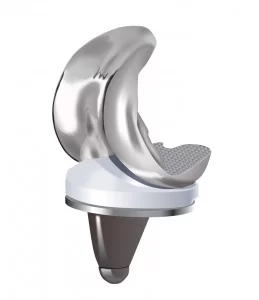
The prosthesis used consists of special titanium and steel alloys that replace the articular surfaces, and a plastic (polyethylene) component placed between them. These materials are highly durable and completely biocompatible. The joint parts mimic the natural anatomy of the knee and function like a natural joint.
Get the Help You Need Today!
How is classic Total Knee Arthroplasty performed?
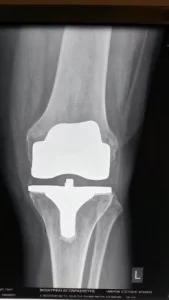
In traditional Total Knee Arthroplasty, the orthopedic surgeon makes an incision of 20-25 centimeters on the anterior surface of the joint. Then:
- The bone is prepared. The damaged cartilage surfaces are removed from the tibia and femur, along with a small section of bone.
- The implants are placed. The removed damaged cartilage and bone are replaced with metal implants.
- A plastic insert is placed. A polyethylene plastic insert is positioned between the metal implants, creating a smooth and slippery surface.
Minimally Invasive Total Knee Arthroplasty (MIS)
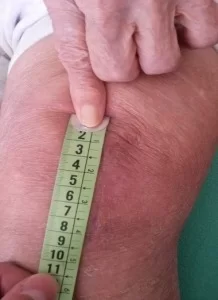
In minimally invasive total knee arthroplasty, a smaller incision of 7-10 cm is made on the anterior surface of the knee, compared to the 20-25 cm incision of the classic arthroplasty. Beyond the smaller incision, this method is generally less invasive because it does not injure the quadriceps tendon, which is very important for knee function. This results in minimized postoperative pain, less blood loss, and faster recovery.
This technique, combined with fast-track rehabilitation protocols, provides better and faster results compared to traditional methods.
The steps of the operation are similar to the traditional technique, but specially designed tools are used, and tissue trauma is much less.
The patient can get up a few hours after surgery once the anesthesia wears off and can return home after 1-2 days, depending on their clinical condition and history.
Get the Help You Need Today!
What are the advantages of minimally invasive total knee arthroplasty?
- Avoidance of muscle injury
- Smaller incisions and less postoperative scarring
- Reduced hospital stay
- Less blood loss and reduced need for transfusions
- Immediate mobilization after surgery
- Minimization of postoperative pain
- Faster recovery and quicker return to daily activities
Frequently Asked Questions about Total Knee Arthroplasty
The anesthesia depends on the patient’s medical history and preference. Usually, an epidural anesthesia is administered, which numbs only the legs while the patient remains conscious. In some cases, light general anesthesia may be given, but this applies to very few patients.
Usually, complications do not occur during total knee arthroplasty. Rarely, complications can arise either during or after the operation.
During surgery, possible complications include infection or bleeding, which are rare in minimally invasive arthroplasty due to the smaller surgical wound and are easily managed.
Postoperatively, thrombosis can occur but is rare, which is why preventive anticoagulant medication is given. Some patients may experience mild stiffness, but this is largely influenced by the patient’s activity after surgery and adherence to rehabilitation and usually resolves after a short period.
There is no ideal age for knee arthroplasty surgery. If the patient wants to be active, they can undergo the surgery regardless of age. What matters significantly is the patient’s medical history and health status. For this reason, preoperative tests are performed to determine the suitability of the candidate for surgery.
The patient returns to daily life after a hospital stay of one to two days. The stiffness and pain experienced before the surgery usually disappear within the first weeks of recovery. What a person can or cannot do after surgery varies per individual, as each case is different.